<?xml version="1.0" encoding="utf-8" ?>
<rdf:RDF xmlns:rdf="http://www.w3.org/1999/02/22-rdf-syntax-ns#" xmlns:dc="http://purl.org/dc/elements/1.1/" xmlns:syn="http://purl.org/rss/1.0/modules/syndication/" xmlns="http://purl.org/rss/1.0/">


<channel rdf:about="http://cclme.iwlearn.org/search_rss">
  <title>Canary Current Large Marine Ecosystem Project</title>
  <link>http://cclme.iwlearn.org</link>

  <description>
    
            These are the search results for the query, showing results 118 to 132.
        
  </description>


  <image rdf:resource="http://cclme.iwlearn.org/logo.png"/>

  <items>
    <rdf:Seq>
      
        <rdf:li rdf:resource="http://cclme.iwlearn.org/en/resources/news-items/cclme-news/TdRs_no_3_ConsultationDemo_n4french2.pdf"/>
      
      
        <rdf:li rdf:resource="http://cclme.iwlearn.org/en/about/working-groups-1/tda-working-group"/>
      
      
        <rdf:li rdf:resource="http://cclme.iwlearn.org/en/resources/news-items/wwf/7821bbf7c299d59bb4ba1c3e773eefde"/>
      
      
        <rdf:li rdf:resource="http://cclme.iwlearn.org/en/resources/events-folder/eea-events/e37c4526a2340319310f047cceec72b9"/>
      
      
        <rdf:li rdf:resource="http://cclme.iwlearn.org/en/resources/news-items/university-of-british-columbia/6ac0847f759a701105253ab6564f1d1d"/>
      
      
        <rdf:li rdf:resource="http://cclme.iwlearn.org/en/resources/news-items/university-of-british-columbia/a0f4696899280a455024e4e51cf2cc71"/>
      
      
        <rdf:li rdf:resource="http://cclme.iwlearn.org/en/resources/publications/reports/cclme-projects-of-demonstration/project-of-demonstration-4-demonstration-of-marine-protected-areas-mpas-as-tools-for-multiple-resource-management-benefits/Directives%20Cogestion%20AMP%20-%20Version%20validee.pdf"/>
      
      
        <rdf:li rdf:resource="http://cclme.iwlearn.org/en/resources/news-items/fao/cbf39d5b9fc1b7593d88c6bfcec2c324"/>
      
      
        <rdf:li rdf:resource="http://cclme.iwlearn.org/en/resources/events-folder/fao/9875ce6f6389fe3d4551f9af802e285a"/>
      
      
        <rdf:li rdf:resource="http://cclme.iwlearn.org/en/photos-videos/photos/studies.jpg"/>
      
      
        <rdf:li rdf:resource="http://cclme.iwlearn.org/images/studies.jpg"/>
      
      
        <rdf:li rdf:resource="http://cclme.iwlearn.org/en/about/copy_of_project-structure-1/structure-eng.jpg"/>
      
      
        <rdf:li rdf:resource="http://cclme.iwlearn.org/en/resources/news-items/wwf/075efcbfa7dbd63daa1be94b7d2730f8"/>
      
      
        <rdf:li rdf:resource="http://cclme.iwlearn.org/en/resources/news-items/wwf/ead16e6b9fce2786ed2aa66c7dc451f9"/>
      
      
        <rdf:li rdf:resource="http://cclme.iwlearn.org/en/resources/events-folder/fao/7812d22e6165de27406cbde9ef12707b"/>
      
    </rdf:Seq>
  </items>

</channel>


  <item rdf:about="http://cclme.iwlearn.org/en/resources/news-items/cclme-news/TdRs_no_3_ConsultationDemo_n4french2.pdf">
    <title>TDR consultant for the preparation of a regional consolidated report on MPAS</title>
    <link>http://cclme.iwlearn.org/en/resources/news-items/cclme-news/TdRs_no_3_ConsultationDemo_n4french2.pdf</link>
    <description></description>
    
    <dc:publisher>No publisher</dc:publisher>
    <dc:creator>fatou.tamba@fao.org</dc:creator>
    <dc:rights></dc:rights>
    <dc:date>2014-09-08T16:35:36Z</dc:date>
    <dc:type>File</dc:type>
  </item>


  <item rdf:about="http://cclme.iwlearn.org/en/about/working-groups-1/tda-working-group">
    <title>TDA Working Group</title>
    <link>http://cclme.iwlearn.org/en/about/working-groups-1/tda-working-group</link>
    <description>This group will lead the TDA process and the finalization of the TDA</description>
    <content:encoded xmlns:content="http://purl.org/rss/1.0/modules/content/"><![CDATA[<p><img alt="fishermens going out to the sea" class="image-right" src="../../images/fishermens-going-out-to-the-sea.jpg/image_mini" /></p>
<p> </p>
<p style="text-align: justify; ">This group will lead the TDA process and the finalization of the TDA, it will maintain close interactions and requires appropriate inputs to the TDA from the other Working Groups, demonstration activities and other activities of the project</p>]]></content:encoded>
    <dc:publisher>No publisher</dc:publisher>
    <dc:creator>Taya Santives</dc:creator>
    <dc:rights></dc:rights>
    <dc:date>2013-02-27T07:50:00Z</dc:date>
    <dc:type>Page</dc:type>
  </item>


  <item rdf:about="http://cclme.iwlearn.org/en/resources/news-items/wwf/7821bbf7c299d59bb4ba1c3e773eefde">
    <title>Tana River Delta Ramsar Site Status a Plus for Coastal East Africa</title>
    <link>http://cclme.iwlearn.org/en/resources/news-items/wwf/7821bbf7c299d59bb4ba1c3e773eefde</link>
    <description>Conservation efforts by WWF and other environmental organizations have continued to forge ahead following Kenya designating the Tana River Delta as a Wetland of International Importance. With the Ramsar Secretariat's announcing that the Tana River Delta is now a Ramsar Site, the 163,600-hectare delta (02°27'S 040°17'E) becomes East Africa's second most important river mouth wetland after the Rufiji Delta in neighbouring Tanzania.</description>
    <content:encoded xmlns:content="http://purl.org/rss/1.0/modules/content/"><![CDATA[<a href="http://wwf.panda.org/about_our_earth/blue_planet/news/?uNewsID=206813"><img align="left" alt="Statistics indicate that a mere 10% of the original coastal forests of Eastern Africa remain, fragmented into 400 patches that cover 6,250km&#178; in Kenya, Tanzania and Mozambique. &copy;&nbsp;John Kabubu" border="0" height="97" hspace="4" src="http://awsassets.panda.org/img/tana_story_image_433112.jpg" vspace="2" width="146" /></a>Conservation efforts by WWF and other environmental organizations have  continued to forge ahead following Kenya designating the Tana River  Delta as a Wetland of International Importance. With the <a href="http://www.ramsar.org/cda/en/ramsar-news-archives-2012-kenya-tana/main/ramsar/1-26-45-520%5E25948_4000_0__">Ramsar Secretariat's</a>  announcing that the Tana River Delta is now a Ramsar Site, the  163,600-hectare delta (02&#176;27'S 040&#176;17'E) becomes East Africa's second  most important river mouth wetland after the Rufiji Delta in  neighbouring Tanzania.<br /><br />Kenya already has 5 designated Ramsar sites in the Great African Rift Valley, namely lakes Naivasha, Elementaita, Nakuru, Bogoria, and Baringo; providing enhanced tourism, employment for Kenya's tourism sector, vibrant horticultural industry around Lake Naivasha, steam geysers in Lake Bogoria, and Kenya's first sanctuary for the critically endangered black rhino in Lake Nakuru National Park. In total, Kenya's 6 Ramsar Sites cover 265,449 hectares. <br /><br />The Tana Delta forms an area of rich biodiversity for sea species including fish and prawns, five species of marine turtles. There are a host of terrestrial animals such as the African Elephant, Tana Mangabey, Tana River Red Colobus, and White Collared monkey. In addition to more than 600 plant species, the Tana Delta is a home for many bird species and is a critical transit point for migratory water birds such as waders, gulls and terns.  <br /><br />According to Coastal East Africa Initiative leader Peter Scheren, the importance of the Tana Delta to Coastal East Africa cannot be underscored enough considering the numerous challenges facing the region.<br /><br />"The Tana Delta is an important ecosystem for Coastal East Africa which continues to face several challenges.  Statistics indicate that a mere 10% of the original coastal forests of Eastern Africa remain, fragmented into 400 patches that cover 6,250km&#178; in Kenya, Tanzania and Mozambique.  The fact that the Tana Delta is now the latest Ramsar Site in Africa is a boost in efforts to conserve the remaining forest cover and help secure the livelihoods of communities' dependent upon this important ecosystem," noted Mr. Scheren<br /><br />Currently, over 20 million people live in and along coastal forests and landscapes in eastern Africa.  The survival of these people is highly dependent on the availability of basic natural resources such as timber, wood-fuel and charcoal, which are extracted from forests, causing a serious dilemma; their dependency and consequent exploitation of these resources destroying the very basis of their existence. The pressures are rapidly rising as the population is expected to double by 2030 putting a serious and already present strain on the meager natural resources present in Coastal East Africa.  <br /><br />WWF implements several conservation projects at the Kenyan coast including the rehabilitation and protection of the Kaya and Boni Dodori forests, the conservation of sea turtles and livelihood enhancing activities.<br /><br /><strong><em>By John Kabubu<br />Communications Officer<br />WWF Coastal East Africa Initiative</em></strong><br /><br /><br />]]></content:encoded>
    <dc:publisher>No publisher</dc:publisher>
    <dc:creator>Taya Santives</dc:creator>
    <dc:rights></dc:rights>
    <dc:date>2013-03-04T11:32:54Z</dc:date>
    <dc:type>Feed Item</dc:type>
  </item>


  <item rdf:about="http://cclme.iwlearn.org/en/resources/events-folder/eea-events/e37c4526a2340319310f047cceec72b9">
    <title>Sustainable Brands Europe [('England, United Kingdom',)]</title>
    <link>http://cclme.iwlearn.org/en/resources/events-folder/eea-events/e37c4526a2340319310f047cceec72b9</link>
    <description>Connect with Sustainability Executives, Brand Strategists, Design &amp; Innovation Leaders, and Marketing &amp; Communication Stakeholders Leaders as SB’Europe convenes to drive innovation that leads to enhanced business and brand value. Explore the Sustainable Brands Renaissance currently being set up, with incredible surges of new values, creativity and solutions and the role that brands play along the path toward sustainability.</description>
    <content:encoded xmlns:content="http://purl.org/rss/1.0/modules/content/"><![CDATA[Connect with Sustainability Executives, Brand Strategists, Design &amp; Innovation Leaders, and Marketing &amp; Communication Stakeholders Leaders as SB’Europe convenes to drive innovation that leads to enhanced business and brand value. Explore the Sustainable Brands Renaissance currently being set up, with incredible surges of new values, creativity and solutions and the role that brands play along the path toward sustainability. Participate in collaborative discussions alongside Unilever, Coca-Cola, Philips, MARS, and hundreds more as the Sustainable Brands community convenes face-to-face in London, England. November 18-19.]]></content:encoded>
    <dc:publisher>No publisher</dc:publisher>
    <dc:creator>Taya Santives</dc:creator>
    <dc:rights></dc:rights>
    <dc:date>2013-06-21T08:48:11Z</dc:date>
    <dc:type>Feed Item</dc:type>
  </item>


  <item rdf:about="http://cclme.iwlearn.org/en/resources/news-items/university-of-british-columbia/6ac0847f759a701105253ab6564f1d1d">
    <title>Summer McJobs are good for kids, says Sauder study</title>
    <link>http://cclme.iwlearn.org/en/resources/news-items/university-of-british-columbia/6ac0847f759a701105253ab6564f1d1d</link>
    <description>A new UBC Sauder School of Business study shows that teenagers who work at summer or evening jobs gain a competitive advantage later in life.</description>
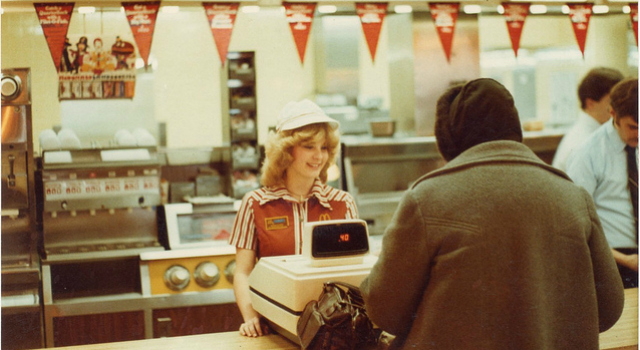
    <content:encoded xmlns:content="http://purl.org/rss/1.0/modules/content/"><![CDATA[<p><a href="http://news.ubc.ca/wp-content/uploads/2014/07/8301882207_f32976d9b9_z2.jpg"><img alt="8301882207_f32976d9b9_z2" class="alignleft size-full wp-image-161915" height="350" src="http://news.ubc.ca/wp-content/uploads/2014/07/8301882207_f32976d9b9_z2.jpg" width="640" /></a></p>
<div class="image-caption"></div>
<div class="image-caption">Photo: Ethan, SportSuburban, Flickr via <a href="http://creativecommons.org/licenses/by/4.0/">Creative Commons</a></div>
<p>A new UBC <a href="http://www.sauder.ubc.ca/">Sauder School of Business</a> study shows that teenagers who work at summer or evening jobs gain a competitive advantage later in life. Developing early knowledge of the working world and how to manage in it, they are more likely to find good employment and earn more money in the future.</p>
<p>“With summer in full swing and kids sitting on the couch, parents are wondering whether to push them to find a job,” says Sauder professor <a href="http://www.sauder.ubc.ca/Faculty/People/Faculty_Members/Seidel_Marc-David">Marc-David L. Seidel</a>, who co-authored the study. “Parents may think that their kids could do better than a job at the local fast food joint. But our study shows even flipping burgers has value &#8211; particularly if it leads to part-time work later during school term.”</p>
<div class="wp-caption alignright" id="attachment_161919" style="width: 160px;"><a href="http://news.ubc.ca/wp-content/uploads/2014/07/Marc-David_Seidel150final.JPG.jpg"><img alt="Prof. Marc-David Seidel.  (Photo: Brian Howell)" class="size-full wp-image-161919" height="150" src="http://news.ubc.ca/wp-content/uploads/2014/07/Marc-David_Seidel150final.JPG.jpg" width="150" /></a><p class="wp-caption-text">Prof. Marc-David Seidel. (Photo: Brian Howell)</p></div>
<p>Seidel and his co-authors found teens in part-time jobs progress to better-suited careers since the early exposure to work helps them hone their preferences. They enhance their soft skills, acquire better references and learn how to job-hunt more successfully – establishing wider career networks.</p>
<p>The more hours that 15-year-olds work, particularly during the school term when they have to learn to manage their time, the better their career prospects, says Seidel. The study showed benefits arose from working up to as much as 33 hours per week during the school year or 43 hours during summer.</p>
<p>Researchers used data from the Statistics Canada Youth in Transition Survey. This represented 246,661 15-year-old Canadian teenagers, looking at their work history over a 10-year period beginning at age 15 and ending at 25 in 2009.</p>
<p>“Adolescent labour has been stigmatized as exploitative with many parents opting to put their kids in summer camp rather than summer jobs,” says Seidel. “However, our research shows that working can offer educational and developmental opportunities that prepare adolescents for the real world.”</p>
<p><b>Background</b></p>
<p>The study, <i>Beneficial “Child labor”: The impact of adolescent work on future professional outcomes</i> appears in the latest edition of the journal <a href="http://www.emeraldinsight.com/books.htm?issn=0277-2833">Research in the Sociology of Work</a>. It was co-authored with Sauder Ph.D. student Marjan Houshmand and Sauder Commerce Scholar Alum Dennis G. Ma.</p>]]></content:encoded>
    <dc:publisher>No publisher</dc:publisher>
    <dc:creator>Taya Santives</dc:creator>
    <dc:rights></dc:rights>
    <dc:date>2014-07-09T10:16:45Z</dc:date>
    <dc:type>Feed Item</dc:type>
  </item>


  <item rdf:about="http://cclme.iwlearn.org/en/resources/news-items/university-of-british-columbia/a0f4696899280a455024e4e51cf2cc71">
    <title>Summer Institute in Sustainability Leadership</title>
    <link>http://cclme.iwlearn.org/en/resources/news-items/university-of-british-columbia/a0f4696899280a455024e4e51cf2cc71</link>
    <description></description>
    <content:encoded xmlns:content="http://purl.org/rss/1.0/modules/content/"><![CDATA[]]></content:encoded>
    <dc:publisher>No publisher</dc:publisher>
    <dc:creator>Taya Santives</dc:creator>
    <dc:rights></dc:rights>
    <dc:date>2014-07-09T10:16:45Z</dc:date>
    <dc:type>Feed Item</dc:type>
  </item>


  <item rdf:about="http://cclme.iwlearn.org/en/resources/publications/reports/cclme-projects-of-demonstration/project-of-demonstration-4-demonstration-of-marine-protected-areas-mpas-as-tools-for-multiple-resource-management-benefits/Directives%20Cogestion%20AMP%20-%20Version%20validee.pdf">
    <title>Subregional guidelines for the co-management of fisheries in Marine Protected Areas of the Northwest African zone</title>
    <link>http://cclme.iwlearn.org/en/resources/publications/reports/cclme-projects-of-demonstration/project-of-demonstration-4-demonstration-of-marine-protected-areas-mpas-as-tools-for-multiple-resource-management-benefits/Directives%20Cogestion%20AMP%20-%20Version%20validee.pdf</link>
    <description></description>
    
    <dc:publisher>No publisher</dc:publisher>
    <dc:creator>fatou.tamba@fao.org</dc:creator>
    <dc:rights></dc:rights>
    <dc:date>2015-11-24T16:39:04Z</dc:date>
    <dc:type>File</dc:type>
  </item>


  <item rdf:about="http://cclme.iwlearn.org/en/resources/news-items/fao/cbf39d5b9fc1b7593d88c6bfcec2c324">
    <title>Sturgeon hatchery practices and management for release. Guidelines</title>
    <link>http://cclme.iwlearn.org/en/resources/news-items/fao/cbf39d5b9fc1b7593d88c6bfcec2c324</link>
    <description>Sturgeon hatchery practices and management for release. Guidelines [from FAO Fisheries News RSS Feed]</description>
    <content:encoded xmlns:content="http://purl.org/rss/1.0/modules/content/"><![CDATA[Sturgeon hatchery practices and management for release. Guidelines [from FAO Fisheries News RSS Feed]]]></content:encoded>
    <dc:publisher>No publisher</dc:publisher>
    <dc:creator>Taya Santives</dc:creator>
    <dc:rights></dc:rights>
    <dc:date>2013-03-04T11:32:31Z</dc:date>
    <dc:type>Feed Item</dc:type>
  </item>


  <item rdf:about="http://cclme.iwlearn.org/en/resources/events-folder/fao/9875ce6f6389fe3d4551f9af802e285a">
    <title>Sturgeon hatchery practices and management for release. Guidelines</title>
    <link>http://cclme.iwlearn.org/en/resources/events-folder/fao/9875ce6f6389fe3d4551f9af802e285a</link>
    <description>Sturgeon hatcheries play an important role in the rehabilitation of the sturgeon stocks in the Caspian Sea and elsewhere. Since the demise of the Union of Soviet Socialist Republics in 1991, a large part of the experience, expertise and specifi c knowledge on sturgeon hatchery practices and management in the Caspian Sea Basin has disappeared, while research and knowledge on sturgeon and hatchery practices in other regions have advanced rapidly in the ...</description>
    <content:encoded xmlns:content="http://purl.org/rss/1.0/modules/content/"><![CDATA[Sturgeon hatcheries play an important role in the rehabilitation of the sturgeon stocks in the
Caspian Sea and elsewhere. Since the demise of the Union of Soviet Socialist Republics in
1991, a large part of the experience, expertise and specifi c knowledge on sturgeon hatchery
practices and management in the Caspian Sea Basin has disappeared, while research and
knowledge on sturgeon and hatchery practices in other regions have advanced rapidly in the
last few decades.
Sturgeon restocking practices that resulted in limited success have caused a critical
reassessment of the entire culture process, the strategies applied for conservation culture, the
design of rehabilitation programmes, the design of hatcheries and the mode of their operation.
This technical paper aims to increase global awareness and to guide and build capacity about
the best practices currently available by providing senior and mid-level sturgeon hatchery staff
with a practical tool for modern sturgeon hatchery practices and management. The technical
technical guidelines it contains focus on hatchery practices that are aimed at reproduction and
growth of fry and fi ngerlings for restocking objectives.
The technical guidelines address a wide range of issues, including: hatchery design and
location; collection and transportation of wild broodstock; selection and maintenance of
broodstock; tagging of sturgeon; water quality and supply; feeding and feed quality; selection
of broodstock for controlled reproduction; spawning and gamete processing; rearing of larvae
and juveniles in tanks; rearing of juveniles in ponds; release of fi ngerlings; sanitary and hygiene
measures; hatchery documentation; hatchery maintenance and repair; staff and labour issues;
monitoring and research; social and environmental responsibility; international regulations
and conventions on sturgeons; and implementation and updating of these technical guidelines.
This technical paper provides specifi c technical guidelines, justifi cations for these
technical guidelines and suggestions to support their implementation. The guidance provided
is based on the FAO Code of Conduct for Responsible Fisheries (1995) and contributes to
the implementation of the Ramsar Declaration on Global Sturgeon Conservation (2006). As
such, the technical guidelines in this paper are part of the capacity-building and awarenessraising
efforts of the partners involved in their preparation in order to increase the success of
sturgeon hatchery practices for release purposes. These partners include: FAO; World Sturgeon
Conservation Society; International Union for Conservation of Nature; Caspian Environment
Programme; United Nations Development Programme; 6th International Symposium on
Sturgeon; World Bank; Institute of Hydroecology; and Central Asia and Caucasus Regional
Fisheries and Aquaculture Commission.]]></content:encoded>
    <dc:publisher>No publisher</dc:publisher>
    <dc:creator>Taya Santives</dc:creator>
    <dc:rights></dc:rights>
    <dc:date>2013-06-21T08:48:57Z</dc:date>
    <dc:type>Feed Item</dc:type>
  </item>


  <item rdf:about="http://cclme.iwlearn.org/en/photos-videos/photos/studies.jpg">
    <title>studies.jpg</title>
    <link>http://cclme.iwlearn.org/en/photos-videos/photos/studies.jpg</link>
    <description></description>
    
    <dc:publisher>No publisher</dc:publisher>
    <dc:creator>Taya Santives</dc:creator>
    <dc:rights></dc:rights>
    <dc:date>2013-03-04T11:51:52Z</dc:date>
    <dc:type>Image</dc:type>
  </item>


  <item rdf:about="http://cclme.iwlearn.org/images/studies.jpg">
    <title>studies.jpg</title>
    <link>http://cclme.iwlearn.org/images/studies.jpg</link>
    <description></description>
    
    <dc:publisher>No publisher</dc:publisher>
    <dc:creator>Taya Santives</dc:creator>
    <dc:rights></dc:rights>
    <dc:date>2013-02-21T11:22:01Z</dc:date>
    <dc:type>Image</dc:type>
  </item>


  <item rdf:about="http://cclme.iwlearn.org/en/about/copy_of_project-structure-1/structure-eng.jpg">
    <title>structure-eng.jpg</title>
    <link>http://cclme.iwlearn.org/en/about/copy_of_project-structure-1/structure-eng.jpg</link>
    <description></description>
    
    <dc:publisher>No publisher</dc:publisher>
    <dc:creator>Taya Santives</dc:creator>
    <dc:rights></dc:rights>
    <dc:date>2013-02-27T07:48:58Z</dc:date>
    <dc:type>Image</dc:type>
  </item>


  <item rdf:about="http://cclme.iwlearn.org/en/resources/news-items/wwf/075efcbfa7dbd63daa1be94b7d2730f8">
    <title>Stop bankrupting our oceans: Europe votes on the future of fish</title>
    <link>http://cclme.iwlearn.org/en/resources/news-items/wwf/075efcbfa7dbd63daa1be94b7d2730f8</link>
    <description>Citizens, fishermen, industry leaders and WWF urge Members of the European Parliament (MEPs) to end 30 years of ocean mismanagement and overfishing and endorse ambitious reform of the Common Fisheries Policy (CFP). For the first time MEPs have a say in CFP reform. In December last year the Parliament's Fisheries Committee voted 13 to 10 in favour of a draft report on the CFP Basic Regulation, the cornerstone of the reform package, ...</description>
    <content:encoded xmlns:content="http://purl.org/rss/1.0/modules/content/"><![CDATA[<a href="http://wwf.panda.org/about_our_earth/blue_planet/news/?uNewsID=207482"><img align="left" alt="Spanish MEP Raul Romeva, Mauricio, artisanal fisherman from MedArtNet and WWF`s Raul Garcia choose more fish!  &copy;&nbsp;WWF / Frank Paul" border="0" height="219" hspace="4" src="http://awsassets.panda.org/img/_mg_4062_436719.jpg" vspace="2" width="146" /></a>Citizens, fishermen, industry leaders and WWF urge Members of the European Parliament (MEPs) to end 30 years of ocean mismanagement and overfishing and endorse ambitious reform of the Common Fisheries Policy (CFP).<br /><br />For the first time MEPs have a say in CFP reform. In December last year the Parliament's Fisheries Committee voted 13 to 10 in favour of a draft report on the CFP Basic Regulation, the cornerstone of the reform package, that would allow fish stocks to recover and create the basis for sustainable fisheries in the European Union (EU). The whole Parliament will now vote on this report on 6 February.<br /><br />"For 30 years fisheries have been pushed to the edge of bankruptcy by fisheries ministers who have sanctioned overfishing and listened to scientific advice and limits only 13 per cent of the time in the past decade. Now the European Parliament has a historic opportunity to put this right and succeed where ministers have failed", said Tony Long, Director of WWF's European Policy Office.<br /><br />The <em>Alliance for Common Fisheries Policy Reform</em>, a consortium of industry leaders involved in the fisheries sector, have welcomed the Fisheries Committee proposals for strong CFP reform. They have written to all MEPs asking them to endorse these, and use their new powers to transform the way EU fisheries are managed.<br /><br />The day before the vote, fishermen from MedArtNet, the association for artisanal fishermen in the Mediterranean, and other artisanal fisheries associations, joined WWF in Strasbourg to meet MEPs and explain why ambitious reform is necessary.<br /><br />"It is of vital importance that the EU fisheries reform is a strong one, because we don't have much time," said Mauricio Pulido, Spanish fisherman, MedArtNet representative in Spain<br /><br />"Fishery resources and the marine environment itself are in a bad state. With the previous fisheries policy being a complete failure, it is important to introduce a new model of management for fisheries, if not, the future of fishing in the short term looks uncertain", he said.<br /><br />Citizens also want a change in fisheries. A WWF poll indicated over 80 per cent of EU citizens wanted to be able to buy fish from sustainable sources and over 20,000 of EU citizens have asked MEPs to stop bankrupting their oceans through the 'Paint a Fish' campaign.<br /><br />Without a strong reform fishing communities will suffer, along with fishing jobs and businesses linked to the sector, as fish stocks continue to decline. <br /><br />"People want this reform, industry wants this reform, fishermen want this reform. Without it, the future for the seafood industry and fishing communities across Europe looks bleak", concludes Tony Long.<br /><br />]]></content:encoded>
    <dc:publisher>No publisher</dc:publisher>
    <dc:creator>Taya Santives</dc:creator>
    <dc:rights></dc:rights>
    <dc:date>2013-03-04T11:32:52Z</dc:date>
    <dc:type>Feed Item</dc:type>
  </item>


  <item rdf:about="http://cclme.iwlearn.org/en/resources/news-items/wwf/ead16e6b9fce2786ed2aa66c7dc451f9">
    <title>Stop Bankrupting Our Oceans, says WWF Director General</title>
    <link>http://cclme.iwlearn.org/en/resources/news-items/wwf/ead16e6b9fce2786ed2aa66c7dc451f9</link>
    <description>Dear Members of the European Parliament, Seventy five per cent of European fish stocks are overexploited and almost one third of fishing jobs in Europe have been lost in the last decade alone – the result of thirty years of mismanagement by fisheries ministers under Europe's Common Fisheries Policy (CFP).</description>
    <content:encoded xmlns:content="http://purl.org/rss/1.0/modules/content/"><![CDATA[<a href="http://wwf.panda.org/about_our_earth/blue_planet/news/?uNewsID=207430"><img align="left" alt="Jim Leape, Director General of WWF International &copy;&nbsp;WWF- Canon / www.ateliermamco.com " border="0" height="219" hspace="4" src="http://awsassets.panda.org/img/jim_leape_wwf_dg_3_433231.jpg" vspace="2" width="146" /></a>Dear Members of the European Parliament,<br /><br />Seventy five per cent of European fish stocks are overexploited and almost one third of fishing jobs in Europe have been lost in the last decade alone &#8211; the result of thirty years of mismanagement by fisheries ministers under Europe's Common Fisheries Policy (CFP).<br /><br />The impending bankruptcy of our oceans, however, is one crisis that we can solve. Recent analysis shows that European fishermen could sustainably increase their catch by 40 per cent and generate &#8364;1.1 billion in additional income per year if fish stocks were allowed to recover.<br /><br />Long-term prosperity for our fishing communities and a sustainable seafood supply are within our grasp. Across Europe, fishermen, processors, retailers and consumers alike want change.<br /><br />The European Parliament now has the power to change fisheries policy and bring fisheries back from the brink &#8211; a rare and historic opportunity for Europe to do something useful.<br /><br />Through this year's once-in-a-decade reform of the CFP, sustainable fisheries management could finally be put in place. For everyone whose livelihood depends on a healthy marine environment, this is the only responsible outcome of reform.<br /><br />The first step is for the whole Parliament to endorse the ambitious proposal for fisheries reform recently adopted by its Fisheries Committee.<br /><br />Yours sincerely,<br />Jim Leape, Director General, WWF<br /><br />]]></content:encoded>
    <dc:publisher>No publisher</dc:publisher>
    <dc:creator>Taya Santives</dc:creator>
    <dc:rights></dc:rights>
    <dc:date>2013-03-04T11:32:52Z</dc:date>
    <dc:type>Feed Item</dc:type>
  </item>


  <item rdf:about="http://cclme.iwlearn.org/en/resources/events-folder/fao/7812d22e6165de27406cbde9ef12707b">
    <title>Sting operation - jellyfish</title>
    <link>http://cclme.iwlearn.org/en/resources/events-folder/fao/7812d22e6165de27406cbde9ef12707b</link>
    <description>30 May 2013, Rome - Surges in jellyfish populations may be one reason for a drop in fish stocks observed in the Mediterranean and Black Sea, according to a new report published by FAO.</description>
    <content:encoded xmlns:content="http://purl.org/rss/1.0/modules/content/"><![CDATA[30 May 2013, Rome - Surges in jellyfish populations may be one reason for a drop in fish stocks observed in the Mediterranean and Black Sea, according to a new report published by FAO.]]></content:encoded>
    <dc:publisher>No publisher</dc:publisher>
    <dc:creator>Taya Santives</dc:creator>
    <dc:rights></dc:rights>
    <dc:date>2013-06-21T08:48:40Z</dc:date>
    <dc:type>Feed Item</dc:type>
  </item>


</rdf:RDF>